Fluorinated compounds under scrutiny: PFAS – best left to toothpaste?
PFAS,受审查的含氟化合物,只能回归牙膏?
Per- and polyfluoroalkyl substances (PFAS) have been widely used in various industries since the 1940s due to their remarkable stability and resistance to water, oil and grease. However, in light of sustainability concerns and increasing regulatory pressure, the demand for more environmentally friendly alternatives is growing.
By Philipp Teriete, Brigitte Weber and Volker Thyssen-Wallner, BYK
自20世纪40年代以来,全氟烷基和多氟烷基物质(PFAS)由于其卓越的稳定性和耐水、耐油和耐脂性而广泛应用于各种工业。然而,考虑到可持续性问题和日益增加的监管压力,对更环保替代品的需求正在增长。
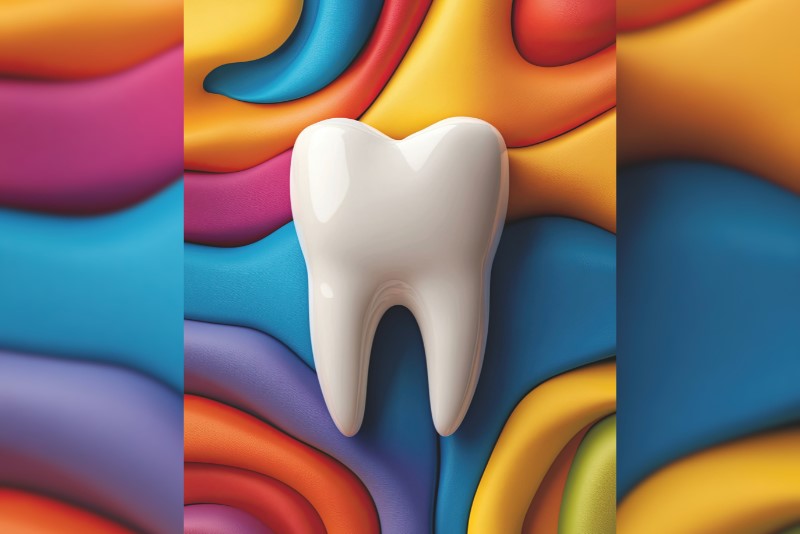
Fluorosurfactants are increasingly under scrutiny – modern fluorine-free additives offer a sustainable alternative for demanding surface applications.
图1: 含氟表面活性剂受到越来越严格的审查-现代无氟添加剂为要求苛刻的表面应用提供了可持续的替代方案。
In the coatings industry, fluorosurfactants and other fluorinated additives are used for their strong influence on the surface tension and energy of paints and coatings. By lowering the surface tension, coatings can wet substrates more evenly, improving both appearance and performance. They can also enhance resistance to water, oil and dirt, which increases durability and protective function.
在涂料行业,氟表面活性剂和其他含氟添加剂因其对油漆和涂料的表面张力和能量的强大效果,而被广泛使用,通过降低表面张力,涂层可以更均匀地润湿基材,从而改善外观和性能.同时,氟表面活性剂还可以增强表面的耐水性/耐油性/耐污性,提升表面的耐用性和防护功能。
What makes fluoro-surfactants special?
Fluorosurfactants can be cationic, anionic or non-ionic. Their fluorine content and structure vary, and in some cases, the fluorine component serves as a modifier for other polymers. This results in a broad product portfolio offering a range of effects in both liquid coatings and dried films. Thanks to the unique characteristics of fluorine, such as its low intermolecular interactions and highly stable covalent C-F bonds, even small amounts of fluorosurfactants can significantly reduce surface tension and impart pronounced hydrophobicity, which helps reduce dirt pick-up on surfaces.
Driven by sustainability and regulatory developments, many companies are seeking environmentally friendly alternatives. Silicone-based additives are a promising option, offering similar benefits to fluorosurfactants, particularly in reducing surface tension and improving surface energy. The key lies in the careful selection and combination of these silicone-based additives.
氟表面活性剂的独特之处
氟表面活性剂分为阳离子、阴离子或非离子三个类别,每种氟含量和结构各不相同.特定情况下,氟成分可作为其他聚合物的改性剂,因此可以自由组合,为液体涂料和干膜提供一系列效果.由于氟的独特特性,例如低分子间相互作用性和高稳性共价C-F键,使得氟表面活性剂,即便很少用量,也可显著降低表面张力,强力提高疏水性,从而帮助减少表面污垢附着。
在可持续发展和监管加强的推动下,许多公司正在寻求更环保的替代品.硅基添加剂是个很有前途的选择,能在降低表面张力和提高表面能方面达到氟类同款效果,用户可仔细挑选和组织硅基添加剂产品.
Recommendations for PFAS-free surface additives
PFAS-based additives are used globally in many coatings and applications. The first step in replacing them is to understand the function of the additive in the specific system. Depending on the desired property, different chemical strategies can be applied. With a clear target and awareness of limitations, effective alternatives can be found.
产品推荐:不含PFAS的表面添加剂
PFAS类型添加剂在全球范围内广泛用于涂料和应用中,替换它们的第一步是了解特定系统中所需添加剂功能.根据所需功能采用不同化学策略.有明确目标,知道利弊,才能找到有效的替代方案.
Reducing static surface tension
Good substrate wetting occurs when the surface tension of the coating is equal to or slightly lower than the surface energy of the substrate. Waterborne systems often pose challenges, as their surface tension is significantly higher than solvent-based systems. When silicone compatibility is given, polysiloxanes can be used for moderate surface tension reduction. For strong reductions in waterborne systems, silicone surfactants are often employed.
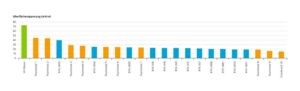
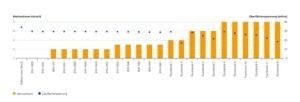
To find PFAS-free alternatives, it is essential to define the product requirements. A comparison of available fluorinated additives shows varying degrees of surface tension reduction, which is also true for fluorine-free options. As shown in Fig. 1, 0.02% active matter of fluorosurfactants 1 and 2 results in only slight surface tension reduction (from 72.8 to approx. 45 mN/m). A similar effect can be achieved with a silicone- and solvent-free surfactant based on modified succinic acid and esters. Fluorosurfactants 3–7 also reduce surface tension moderately, by around 44 to 49 mN/m. Comparable reductions can be achieved with polyether-modified polydimethylsiloxanes or other modified polysiloxanes. Fluorosurfactant 8 is highly effective in lowering surface tension, but equivalent performance is possible with appropriately modified silicone alternatives.
降低静态表面张力
当涂层的表面张力等于或略低于基材的表面能时,基材湿润性良好.但水性系统的表面张力明显高于溶剂型系统,润湿往往是个难题,当有机硅相容性既定时,可添加聚硅氧烷适当降低表面张力.如果需要大幅度减低水性系统的表面张力,通常采用硅表面活性剂.
不管是不是含氟添加剂,只要产品不同,在表面张力降低方面表现就会各异。故而,要找不含pfas的替代品,就必须搞清产品需求.如图1所示,0.02%活性成分的含氟表面活性剂1和2,只会轻微降低表面张力 (从72.8降至约.45 mN / m),而以改性琥珀酸和酯为基础的有机硅及无溶剂表面活性剂也能达到类似效果.图中氟表面活性剂3-7也可适度降低表面张力(约为44至49 mN/m).这一效果,用聚醚改性聚二甲基硅氧烷或其他改性聚硅氧烷也能拿到. 氟表面活性剂8能有效减低表面张力,但适当改性的有机硅替代品可能实现同等效力.
Fig. 1 Effective reduction of static surface tension using silicone surfactants.
图1:硅表面活性剂可有效减低静态表面张力
All effects were measured at 0.02% active matter. In practice, dosage series are advisable for optimal performance. Similar behavior is seen in a waterborne 2K PU clearcoat (Fig. 2), where surface tension drops from 34.2 to below 30.0 mN/m with just 0.1% fluorine-free surfactant. This improves both wetting and flow. Fluorosurfactants often lower surface tension excessively and influence other properties, such as foam stabilisation. A foam test (scale 1 = no foam to 5 = high foam stability) reveals significantly lower foam stabilisation with fluorine-free surfactants. Almost all fluorosurfactants strongly stabilise foam.
所有测试结果均基于0.02%活性物质,实际应用时应自行选择最优量.在水性2K PU透明涂料中,也可以看到类似表现(图2),仅使用0.1%的不含氟表面活性剂,表面张力从34.2 mN/m降至30.0 mN/m以下.润湿和流动性均随之改变.氟表面活性剂通常会过度降低表面张力,从而影响稳泡性等其他性能. 泡沫试验表明,使用非氟表面活性剂时泡沫稳定性明显较低. (1级=无泡沫至5级=泡沫稳定性高) .当然,几乎所有的氟表面活性剂都能稳定泡沫。
Fig. 2 // Static surface tension and macrofoam in a waterborne 2K PU clearcoat; 0.1 % active matter surfactant.
图表2:水性2KPU透明涂料系统中表面张力及大泡沫率(表面活性剂:0.1%活性成分)
Spreading behaviour of liquids
Another aspect is how additives influence solvent spreading on various substrates – critical for achieving good coating flow and wetting. In spreading tests, additives are blended into solvents and applied (after 24 hours conditioning) to non-polar substrates like PE, PP, PET and PVC. A drop of 0.01 ml is applied without pressure, and the spread is measured after 10 and 30 seconds. Pure water does not wet the substrate, but surfactant-added water spreads immediately. Timing accuracy is essential. Fluorosurfactants show little effect on spreading. Only fluorosurfactants 6 and 10 yield marginal improvements. Similarly, fluoromodified acrylates like BYK-3440 and BYK-3441 show limited spreading. In contrast, polyether-modified polysiloxanes significantly increase drop diameter, enhancing wetting on all substrates.
液体的扩散行为
另一个因素,是添加剂怎样影响溶剂在各种基材上的扩散,这对于实现良好的涂层流动和润湿至关重要.在涂布试验中, (经过24小时的调整后),将添加剂混合到溶剂中,涂在PE、PP、PET和PVC等非极性基材上,无压力滴入0.01 ml滴液,在10秒和30秒后测量扩散.纯水不会弄湿基材,但添加了表面活性剂的水会立即扩散(计时精度至关重要).大部分氟表面活性剂对扩散几乎没有影响,只有氟表面活性剂6和10产生微小改善.同样.像BYK-3440和BYK-3441类氟改性丙烯酸酯也表现出有限的扩散.相比之下,聚醚改性的聚硅氧烷显著增加液滴直径,增强在所有基材上的润湿性。
Wetting performance without fluorosurfactants
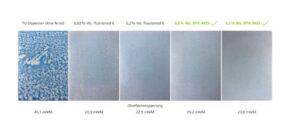
Wetting is closely linked to flow and surface tension. While fluorosurfactants affect surface tension, they often have minimal impact on spreading. Thus, direct wetting behaviour should be assessed when replacing additives. Fig. 3 shows a PU dispersion without surfactant failing to wet PU leather. A 0.02% fluorosurfactant improves this but remains suboptimal. At 0.2%, the result is much better. This effect can be matched using fluorine-free polyether-modified polysiloxanes. Here, a fluorosurfactant must lower surface tension to 22.9 mN/m, while the silicone surfactant achieves similar wetting at 29.2 mN/m. For difficult substrates, the dosage may need adjustment.
非氟表面活性剂的润湿性能
润湿与流动和表面张力密切相关,虽然氟表面活性剂会影响表面张力,但通常它们对扩散的影响很小.因此,在更换添加剂时应评估直接润湿行为.图3显示,不含表面活性剂的PU分散剂不能湿润PU皮革;0.02%的氟表面活性剂改善了这一点,但效果有限, 0.2%用量下,结果要好得多.而无氟聚醚改性聚硅氧烷可以达到同样的润湿效果。氟表面活性剂必须将表面张力降低到22.9 mN/m,才能实现足够润湿.而硅表面活性剂在29.2 mN/m时已经实现足够润湿.当然对于难处理的基材,用量可能需要调整.
Fig. 3 // Wetting of a PU dispersion on PU leather.
图表3:PU皮革上PU分散剂的润湿效果
Flow performance without fluorosurfactants
Even with good wetting, flow and appearance must be optimised for a smooth finish. Fig. 4 illustrates a floor coating applied in a crosshatch pattern. Despite reduced surface tension with a fluorosurfactant, full substrate wetting is not achieved. Compared to the surfactant-free version, the improvement is visible but insufficient. For optimal flow, surface tension should approach that of the substrate, and polar/dispersive fractions must align. Polyether-modified polysiloxanes offer benefits here. They improve wetting without overly lowering surface tension or altering the polarity balance. This enables better flow, fewer application marks, full coverage and a more homogeneous surface.
非氟表面活性剂的流动性
即便具备良好的润湿性,想获得光滑的成品表面,流动性和外观也必须优化进行优化.图4是以横线图案刷涂的地板表层.尽管氟表面活性剂降低了表面张力,但未能实现基材的完全润湿.相比于不含表面活性剂的版本,改进明显但还不够.
为实现最佳流动,表面张力应接近基材,极性/色散分数也必须一致.聚醚改性聚硅氧烷则益处多多,在不过度降低表面张力或改变极性平衡的情况下改善润湿,从而实现更好的流动,更少的施工痕迹,更完全得覆盖和更均匀的表面.
最初发布时间:24.06.2025
图片来源:Fostor - stock.adobe.com, AI生成
翻译为广州九维提供. |